Sewage backups in Goodyear often trace to aging cast iron lines under homes in Estrella and Palm Valley, where tree roots and shifting desert soils crack pipes during the mild winter months. Hot summer temperatures accelerate bacterial growth in standing black water, raising health risks and complicating drying inside stucco homes with limited ventilation. Maricopa County code requires full removal of porous materials once Category 3 water contacts them, so crews must separate and dispose of carpet pads, baseboards, and drywall sections without spreading contaminants to unaffected rooms.
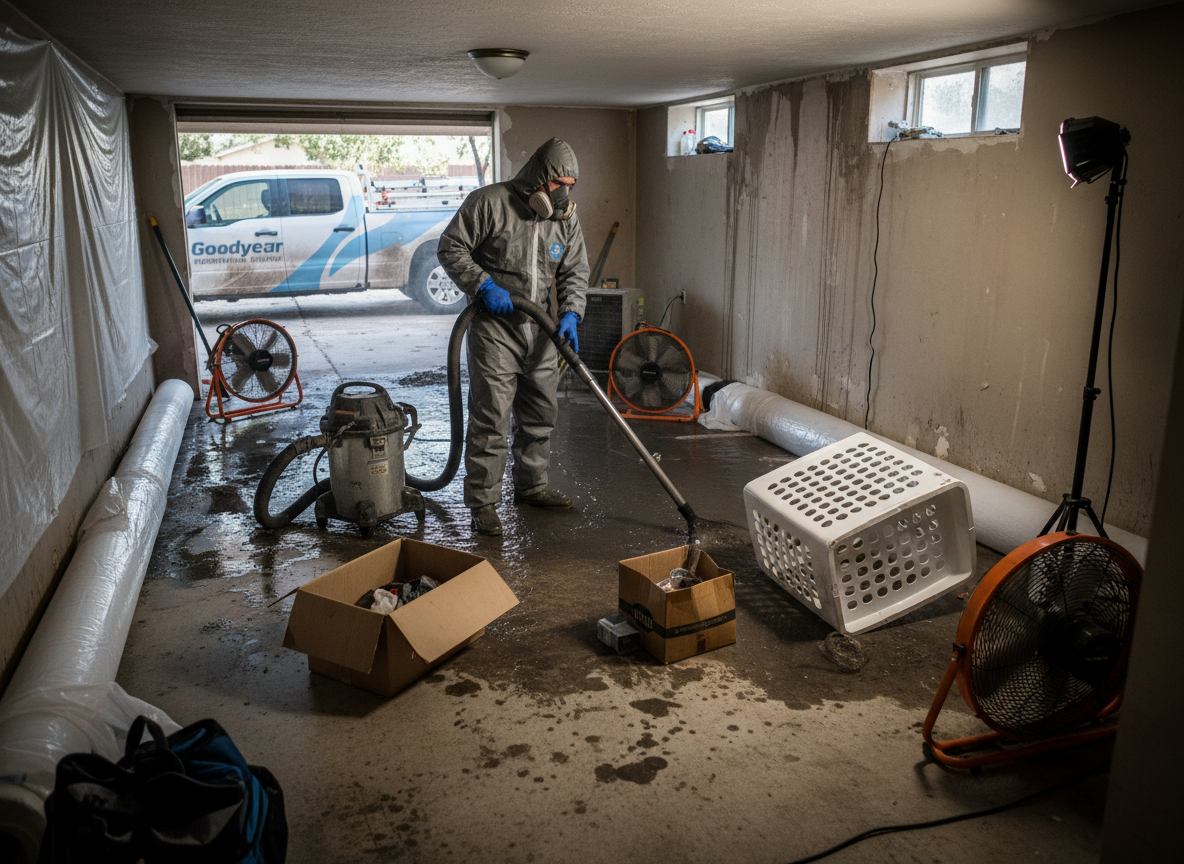
Technicians start by isolating the affected zone with plastic sheeting and negative air machines to protect the rest of the house, especially in single-story ranch layouts common around Goodyear Village. Extraction uses truck-mounted units rated for solids and liquids, followed by antimicrobial application on concrete slabs that retain moisture longer in the dry climate. Final clearance testing checks for hidden moisture behind cabinets or under tile in Canyon Trails properties, where poor grading around the foundation can allow repeat intrusion from monsoon runoff.
Nearby Phoenix and Tolleson jobs frequently involve shared sewer mains that back up into multiple residences at once, requiring coordination with city crews before interior work begins. Homeowners in Peoria Crossing should expect longer drying times when humidity spikes after summer storms, as evaporative coolers can pull contaminated air through the structure if not sealed early.
Technician insight
In Goodyear, the thing that catches most people out with Sewage Backup Cleanup is how quickly summer heat drives bacterial growth through slab cracks in pre-1995 homes around Estrella, especially when evaporative coolers pull contaminated air into living spaces before we can seal them.
Sewage Backup in Estrella Kitchen
A clogged main line sent black water across the kitchen and into the adjacent family room of a 1992 ranch home. We isolated the zone, extracted the sewage, removed the saturated flooring and baseboards, then dried the concrete slab over four days before the homeowner could reinstall cabinets.
Sewage Backup Cleanup Services We Offer
✓Black Water Extraction
Removes standing sewage from floors and subfloors using commercial pumps rated for solids, preventing further absorption into concrete slabs common in Estrella homes.
✓Biohazard Contamination Removal
Disposes of saturated carpet, pad, and drywall sections per Maricopa County guidelines while containing odors that travel quickly through open floor plans in Palm Valley.
✓Sewage Odor Elimination
Applies targeted hydroxyl and ozone treatments to neutralize odors trapped in HVAC ducts and wall cavities after backups in older Canyon Trails properties.
✓Structural Drying After Sewage
Uses industrial dehumidifiers and air movers on concrete and wood framing to reach safe moisture levels before reconstruction in hot desert conditions.
✓Affected Flooring Disposal
Safely removes and hauls tile, laminate, and hardwood contaminated by Category 3 water, avoiding cross-contamination in multi-room layouts typical around Goodyear Civic Square.
Sewage Backup Cleanup Cost in Goodyear, AZ
| Service | Typical Range | What Affects It |
|---|---|---|
| Initial Assessment | $200–$350 | Covers inspection and moisture mapping in Palm Valley or Estrella homes. |
| Black Water Extraction | $800–$1,800 | Varies by volume and access in single-story versus multi-level layouts. |
| Material Removal and Disposal | $600–$1,400 | Includes hauling carpet, drywall, and pad from Canyon Trails properties. |
| Odor Treatment | $400–$900 | Depends on HVAC involvement and home age in Goodyear Village. |
| Full Drying Package | $500–$1,200 | Daily equipment rental until clearance in hot summer conditions. |
Ranges are typical for Goodyear, AZ and confirmed with an exact written quote before any work starts.
How it works
- 1
Site Assessment
Inspect the source, map affected rooms, and test moisture in walls and floors of the Goodyear property.
- 2
Containment Setup
Install plastic barriers and negative air to isolate the sewage zone from the rest of the home.
- 3
Extraction and Removal
Pump out liquids, cut away and bag contaminated materials for proper disposal.
- 4
Cleaning and Antimicrobial
Apply EPA-registered treatments to all remaining surfaces and begin drying.
- 5
Final Drying and Clearance
Monitor moisture readings until levels meet industry standards before allowing reentry.
Pricing
Costs depend on square footage affected, depth of contamination, and whether HVAC or slab work is required.