2026-08-31 · David Miller
Drying Out A Wet Home In Extreme Desert Heat
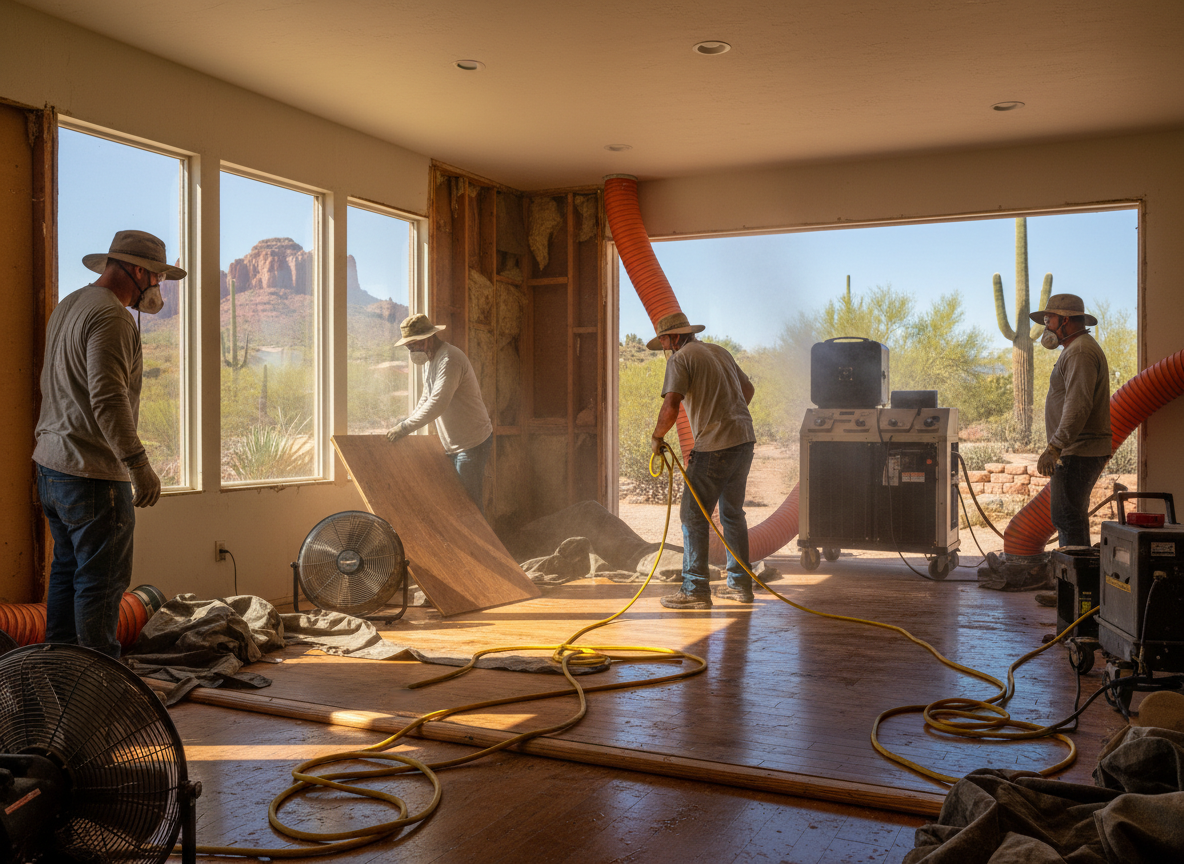
In Goodyear's extreme desert heat, drying a wet home usually takes 3 to 5 days when crews deploy industrial dehumidifiers and air movers right away, though thicker materials like drywall or carpet padding in Palm Valley or Estrella homes can extend that window by a day or two.
How Desert Heat Changes the Drying Timeline
Goodyear summers often push daytime temperatures above 110 degrees, which speeds surface evaporation but traps moisture deeper in walls and slabs if humidity is not controlled. Homes in Canyon Trails and Peoria Crossing built in the last 20 years use tighter construction that slows natural airflow compared with older stock near Goodyear Village. Once winter temperatures drop into the 50s at night, the same homes retain moisture longer because cooler air holds less vapor. Crews must run equipment longer in Maricopa County because monsoon humidity spikes can push indoor relative humidity above 60 percent even when outdoor air feels dry. Starting extraction within the first hour after a leak prevents the 24-hour mold window that desert heat accelerates.
Equipment That Works in Extreme Temperatures
Portable refrigerant dehumidifiers rated for 70-pint daily removal handle the load when paired with high-velocity air movers positioned every 10 to 12 feet. In homes near Estrella Mountain Regional Park, crews add low-grain refrigerant units during July and August because standard machines lose efficiency above 95 degrees ambient. Moisture meters check drywall to 3/4-inch depth and concrete slabs to 1-inch depth before equipment is removed. Homeowners in Avondale and Tolleson often see faster results when ceiling fans run on high alongside the professional setup to move air across wet surfaces.
Step-by-Step Process for Structural Drying
First, water extraction removes standing water with truck-mounted pumps rated at 200 gallons per minute. Next, technicians cut small inspection holes in baseboards to allow airflow behind walls. Air movers are angled at 45 degrees to create a vortex that pulls moisture from cavities. Dehumidifiers are emptied twice daily and reset to 35-40 percent relative humidity. Daily moisture logs track progress in every room. After 48 hours, affected drywall sections are rechecked; if readings stay above 15 percent, additional drying time or limited demolition follows.
Challenges Specific to Goodyear Neighborhoods
Slab-on-grade construction common in Palm Valley and PebbleCreek lets water travel under tile into adjoining rooms, requiring perimeter drying that can add 12 to 24 hours. Monsoon runoff from Estrella Mountain Regional Park occasionally affects lower lots in Rio Paseo and Sarival Paseo, introducing silt that must be rinsed before drying begins. Older plumbing in Historic Goodyear increases the chance of repeated leaks, so crews document every affected joist for future reference. Nearby Phoenix traffic can delay equipment delivery by an hour during rush periods, which is why local crews stock backup units at 385 N 137th Ave.
When Professional Help Prevents Further Damage
Homeowners who attempt DIY drying with box fans often see hidden moisture remain in subfloors, leading to cupping hardwood or musty odors weeks later. Structural Drying & Dehumidification crews carry the meters and containment needed to confirm every layer is dry. For larger events, the How Long Does Water Damage Restoration Take In Goodyear article outlines realistic schedules based on square footage. Goodyear Restoration Pros operates Monday through Friday 8am to 6pm and Saturday 9am to 2pm to respond quickly when desert heat makes every hour count.