
2026-08-31 · David Miller
Mold Growth Risks Following Summer Storms In The Valley
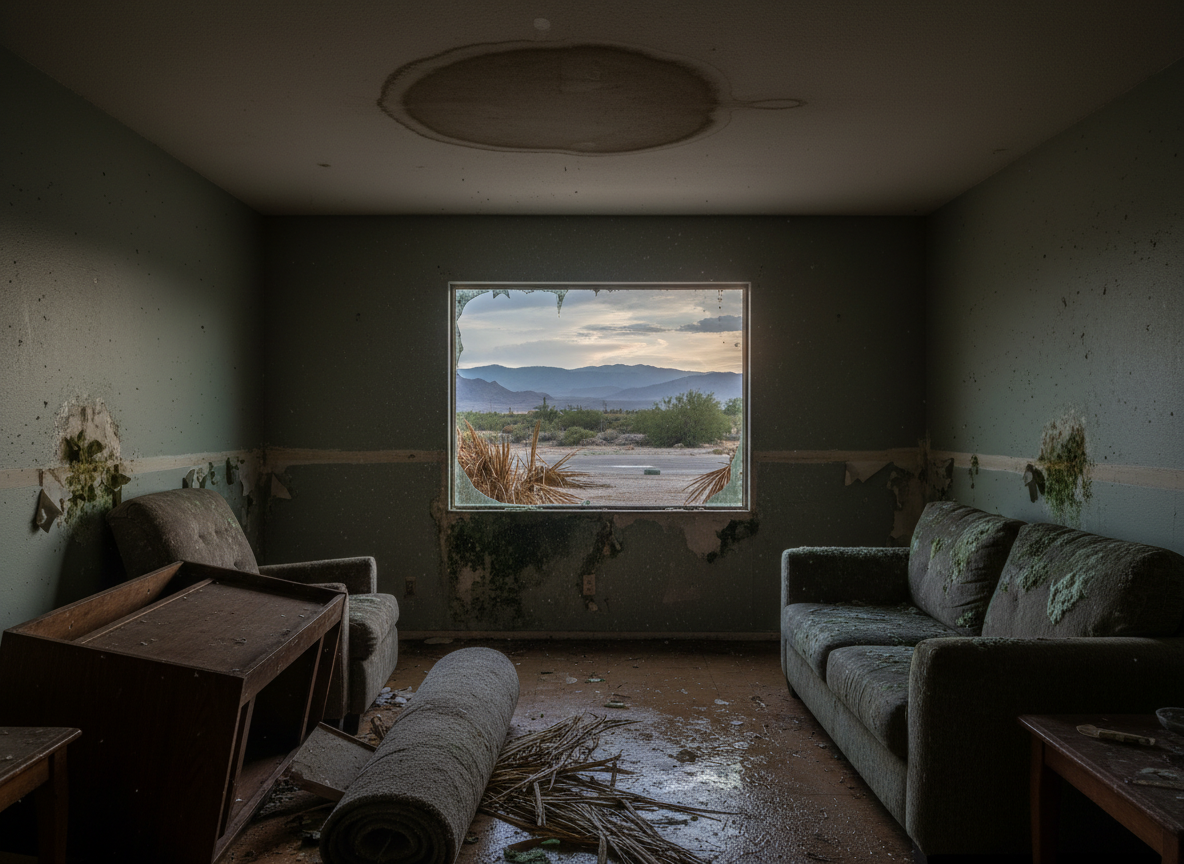
Mold growth can begin within 24 to 48 hours after summer storm water enters homes across Goodyear. In Maricopa County the combination of intense monsoon downpours and 100-plus-degree heat creates ideal conditions for spores to colonize drywall, insulation, and subflooring before residents notice visible signs.
How Monsoon Moisture Enters Local Homes
Sudden rainfall during July and August often overwhelms roof flashings and window seals in neighborhoods such as Palm Valley and Canyon Trails. Stucco-clad homes built on concrete slabs, common throughout Estrella and Peoria Crossing, allow water to wick upward along foundation edges when gutters overflow. Properties near Estrella Mountain Regional Park also face wind-driven rain that forces moisture behind exterior cladding. Once inside wall cavities, the water remains trapped because the hot desert air outside dries surfaces quickly while interior humidity stays elevated. This hidden saturation feeds mold colonies on paper-faced drywall and wood framing within two days. Residents in Goodyear Village report similar issues when storm drains back up along older streets.
Timeline for Mold Development After Storms
Spores begin germinating once relative humidity inside wall cavities exceeds 60 percent for more than 24 hours. In the Valley’s hot summers this threshold is reached faster than in milder climates because evaporating rainwater raises indoor moisture levels rapidly. Within 48 hours black or green colonies often appear on baseboards and carpet padding in affected rooms. By day five the growth can extend into HVAC ducts if air handlers pull humid air through wet filters. Homes in Avondale and Tolleson experience the same accelerated timeline when monsoon runoff enters crawl spaces or garage slabs. Structural drying must start before the 72-hour mark to interrupt this progression and prevent secondary damage to adjacent drywall.
High-Risk Areas Inside Goodyear Properties
Attics above living spaces in Palm Valley homes trap storm water that leaks through tile roofs during high winds. Insulation in these spaces holds moisture against ceiling joists, creating mold colonies that later drop spores into bedrooms. Slab edges along south-facing walls in Estrella frequently absorb runoff from driveways, allowing mold to form beneath base cabinets in kitchens. Bathrooms in older sections of Historic Goodyear develop hidden growth behind shower surrounds when wind-driven rain enters vent stacks. Laundry rooms near exterior doors also collect moisture from wet shoes and clothing tracked inside after storms. Each of these locations requires targeted inspection rather than surface cleaning alone.
Why Local Heat and Humidity Accelerate Growth
Daytime temperatures above 105 degrees cause rapid evaporation from wet exterior surfaces while interior air conditioning systems struggle to remove the added vapor load. This imbalance leaves wall cavities at 65 to 75 percent relative humidity for extended periods. The same pattern affects homes in nearby Phoenix and Tolleson where concrete construction retains heat overnight. When residents run evaporative coolers instead of refrigerated air, the added moisture from swamp coolers compounds the problem after storms. These conditions shorten the safe window for intervention compared with drier winter months.
Practical Steps for Assessment and Drying
Begin by locating all wet materials within 24 hours using moisture meters on drywall and flooring. Remove saturated carpet padding and insulation immediately to stop the 48-hour germination clock. Run commercial air movers and dehumidifiers continuously until wood moisture content drops below 12 percent. Homeowners in Canyon Trails and Estrella often benefit from linking to structural drying and dehumidification services that monitor humidity in real time. For visible colonies or persistent odors after initial drying, schedule mold damage remediation after water damage to contain and remove affected materials. Additional context on monsoon patterns appears in the post What Monsoon Season Means For Water Damage In Goodyear Homes.